Microplastics are ubiquitous in the environment. As an emergent pollutant, microplastics are potentially harmful to the
ecosystems and human health. Rivers play an irreplaceable role in the transmission of microplastics pollution. They are not only a
temporary sink of microplastics, but also an important pathway for microplastics from land to the ocean. Through the overview of the
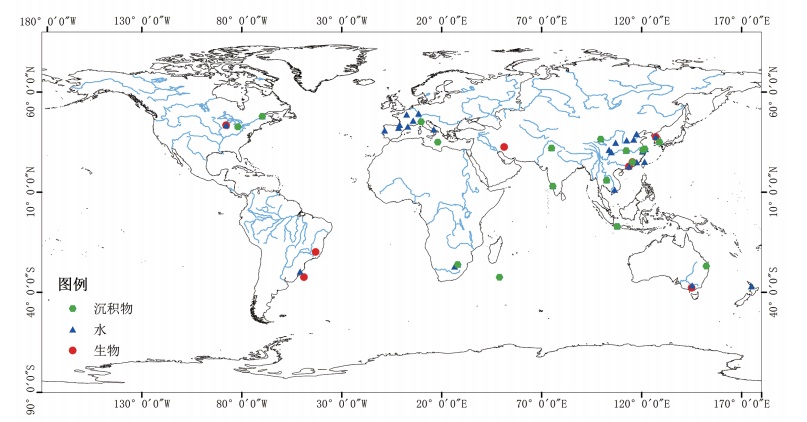
previous studies on riverine microplastics globally, we found that the highest abundance of microplastics was from the Sinos River
in Brazil, while for the riverine sediments, results from the Suzhou creek in China and the Jedara River in Tunisia were relatively
higher. The microplastics in the rivers were mainly white fibers with a particle size of less than 1 mm. The microplastic pollution was
significantly affected by human activities and land use types especially in industrial areas. The selection of sampling methods and
experimental reagents will affect the concentration of microplastics, and result from large flow sampling were identified with more
microplastics. However, the current researches on microplastics in rivers are mostly focused in urban areas, the related studies in
remote areas should be strengthened. Meanwhile, due to the continuous changes of microplastic pollution in rivers, it is necessary to
study the temporal and spatial variability of river microplastic pollution and establish a long-term real-time monitoring mechanism in
order to grasp the status of microplastic pollution.
WANG Zhaoqing, ZHANG Yulan, KANG Shichang, YANG Ling, GAO Tanguang
. Research progress of microplastic pollution in the global rivers[J]. Chinese Journal of Nature, 2021
, 43(4)
: 251
-258
.
DOI: 10.3969/j.issn.0253-9608.2021.04.003

