SPECIAL TOPIC

Weathering and reverse weathering processes in marine environments

Expand
  • State Key Laboratory of Marine Geology, Tongji University, Shanghai 200092, China

Received date: 2024-11-11

  Online published: 2025-01-26
Abstract

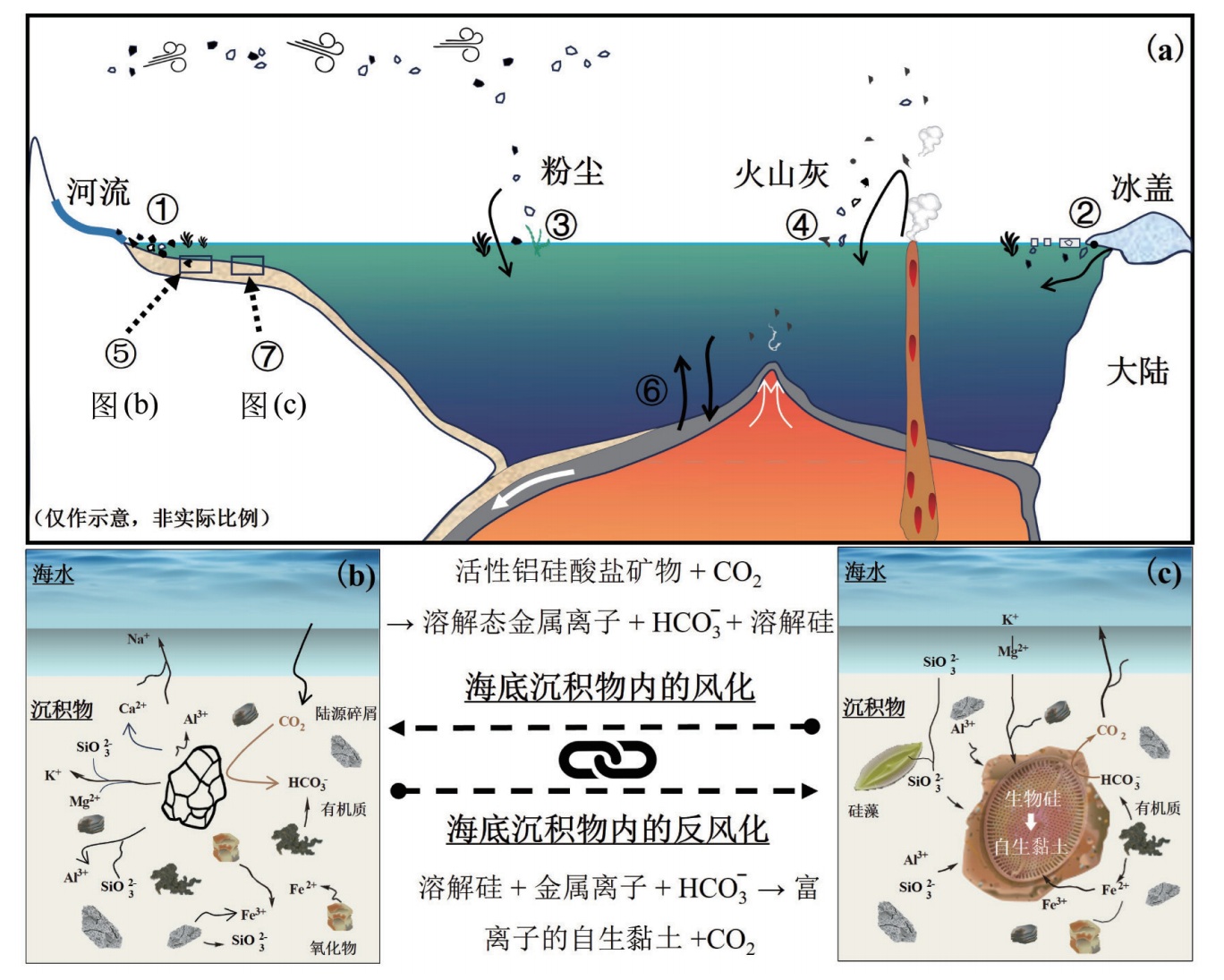
The dissolution of weathering processes in marine environments can directly alter the geochemical composition of seawater and consume carbon dioxide (CO2), and indirectly impact carbon cycling and climate change by promoting marine primary productivity. In contrast, submarine reverse weathering, by incorporating dissolved ions and alkalinity in seawater to form authigenic clay, consumes CO2 and serves as the sink for many key elements in seawater, thus acting as an important driver of climate change. Marine weathering and reverse weathering mostly happen on seafloor and alter the geochemical compositions of both reactive fluids and solid phases such as rocks and sediments on seafloor. These weathering processes can further affect the deeper Earth’s geochemical cycles when weathered seafloor basalts and altered sediments are subducted into the deep mantle. Under the goal of marine carbon neutralization, a thorough understanding of the natural processes and mechanisms of marine and submarine weathering and reverse weathering is crucial for assessing potential marine negative emission strategies.

Cite this article

WU Xuechao, YANG Shouye . Weathering and reverse weathering processes in marine environments[J]. Chinese Journal of Nature, 2025 , 47(1) : 23 -32 . DOI: 10.3969/j.issn.0253-9608.2025.01.003

Outlines

/