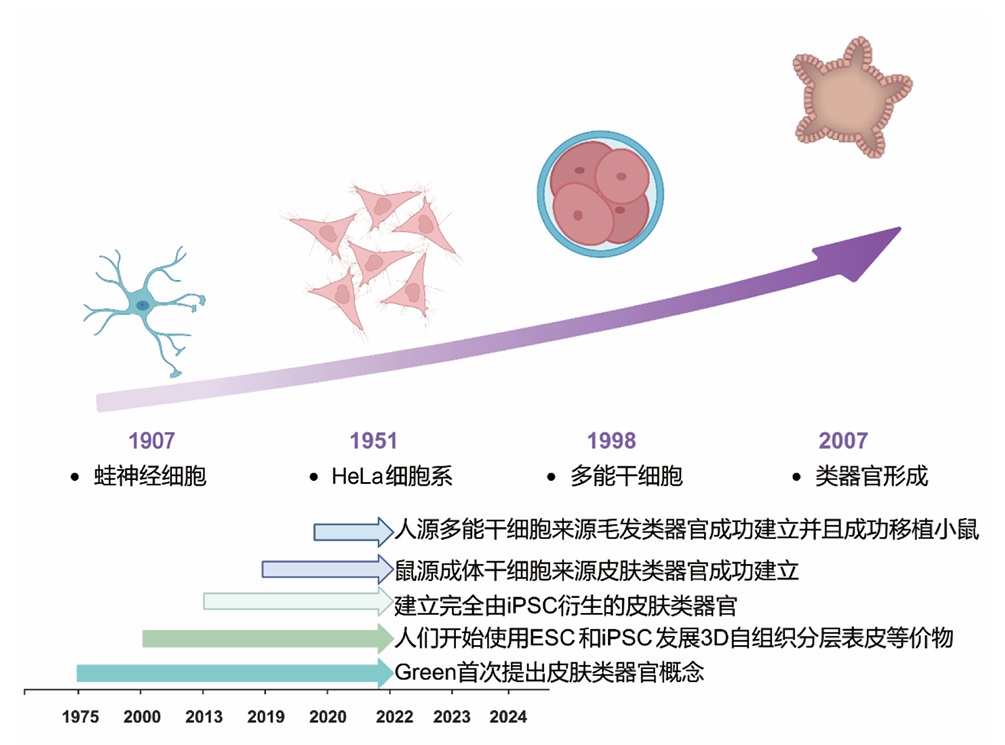
Skin, the largest organ of the human body, is composed of closely adjacent epidermis and dermis, which plays vital roles
in human life, including barrier function, thermoregulation, sensation, and immunity. In recent years, with the rapid advancement
of organoid research, skin organoids have garnered increasing attentions and have been widely applied. This review systematically
summarizes current methodologies for constructing both composite skin organoids and individual skin appendage organoids,
encompassing differentiation induction from induced pluripotent stem cells (iPSCs) to self-organization of adult stem cells into
organoids. Additionally, it outlines the diverse applications of skin organoids, such as disease modeling, regeneration of tissues and
organs, tumor research, and drug efficacy evaluation. In addition to comprehensively evaluating existing constraints in skin organoid
development, we present targeted recommendations for technological innovation, establishing a conceptual foundation for advancing
this field.