With the increasing global energy consumption, energy shortages, and environmental pollution, the Chinese government
has solemnly proposed the “dual-carbon” strategy to promote sustainable development. Building energy consumption is the main
part of energy consumption, and windows are the least energy-efficient part, so developing sustainable smart windows that balance
ecological responsibility with human comfort becomes imperative. There are many types of smart windows, and among other stimuli,
electricity, as the most controllable driving force, stands out. And the combination of electricity and electrochromic materials and
device structures makes electrochromic materials a suitable choice for intelligently adjusting colors. Traditional low emissivity glass
is not smart enough for light regulation, so people begun looking for other electric-driven smart windows. Based on this, this paper
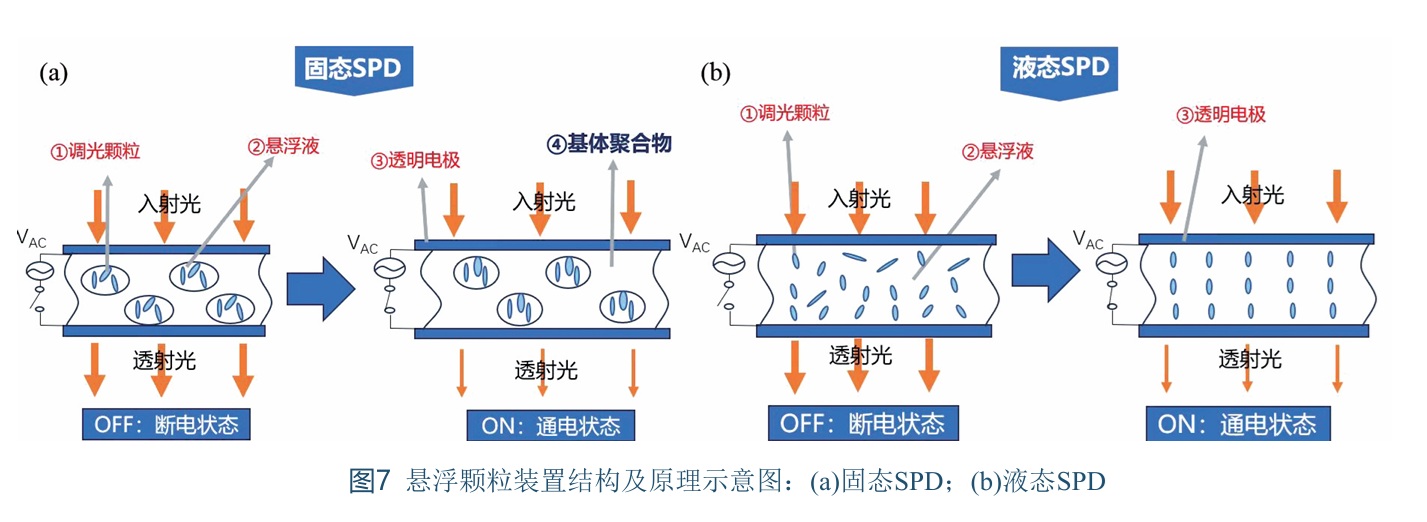
introduces three types of electric-driven smart windows—electrochromic, polymer-dispersed liquid crystal, and suspended particle
devices—including their concepts, structures, reaction mechanisms, applications, and a brief overview of their performance metrics. It
is believed that electric-driven smart windows will have a broader market in the near future.