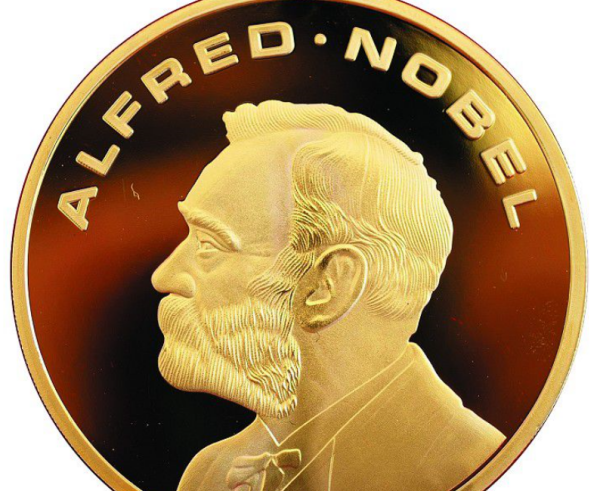
In 1985, Donna Strickland and Gérard Mourou published a paper about the invention of chirped pulse amplification (CPA) conception, a milestone of high peak power laser development, which generated the ultra-intense and ultra-short laser and high field laser physics. Now, the peak power of PW even 10 PW is possible based on CPA, which is regarded as “their work will affect research on everything from fusion to astrophysics”. Therefore, due to the invention of CPA, Prof. Gérard Mourou and Prof. Donna Strickland won the Nobel Prize in Physics 2018. This paper will give a brief introduction about the CPA technology, and the significance about Prof. Gérard Mourou and Prof. Donna Strickland’s invention with the recent progresses of ultra-intense and ultra-short laser, related high field physics and Shanghai Superintense Ultrafast Laser Facility (SULF) in State Key Laboratory of High Field Laser Physics in SIOM.
Superconductivity has been the frontier research area in condensed matter physics for more than one hundred years. At least, there are 5 Nobel Prizes in Physics awarded to superconductivity research, and about 10 laureates. More impressively, Chinese scientists have been making more and more important contributions to the superconductivity research, especially for recent leading studies on iron-based superconductors. Here, we will learn about the stories from these Nobel laureates, and introduce the importance of superconductors. Further possible Nobel prizes in superconductivity will be also discussed.
A popular accurate introduction is made for the prize-winning work and related background knowledge for 2016 Nobel Prize in Physics. The historical development leading to these theoretical discoveries and the careers of the three Nobel Laureates are also investigated. The paper is concluded with the implications of these achievements as well as the lessons we can learn.
On October 3rd, 2017, it was announced that the Nobel Prize in Physics 2017 was divided, one half awarded to Rainer Weiss, the other half jointly to Barry C. Barish and Kip S. Thorne “for decisive contributions to the LIGO detector and the observation of gravitational waves”. In this article, I shall try to answer the following questions: What is this scientific discovery? What is its relationship with the development of modern physics? What is its relationship with Einstein? Is gravitational wave useful? Is there any way to shield gravitational waves? What is the future of the detection of and research on gravitational waves? What are the future programs of gravitational wave detection in China?