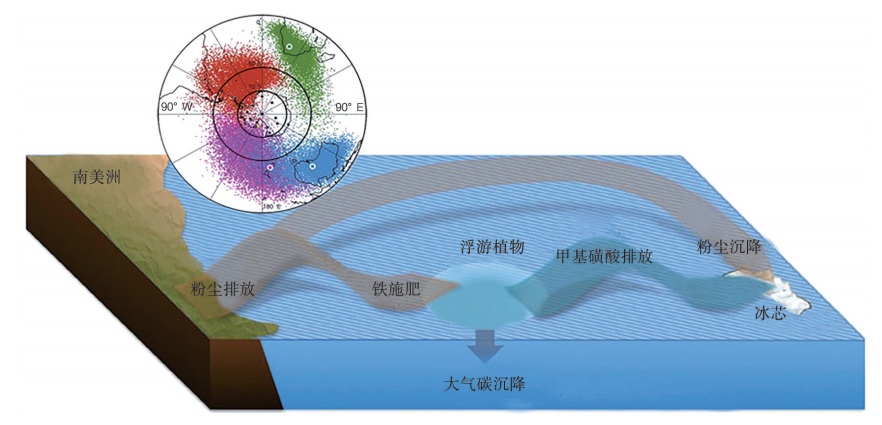
具有生物活性的元素铁通过调控浮游植物生产力大小,从而影响海 气之间碳的交换,并最终调节海洋生态系统与全
球气候效应。陆源生物活性元素铁以大气干、湿沉降的方式进入冰冻圈各要素(冰川、冰盖、冻土、海冰与冰山),然后以
固态的形式储存在地球表层。随着全球气候变暖,冰冻圈各要素退缩过程使其以迁移与转化的形式再次进入地球表层系统,
进行全球再分配。自2000年以来,关于铁生物地球化学循环的研究,已在三极(南极、北极与青藏高原)冰冻圈区取得了
初步研究成果。特别是近期,在南、北两极围绕冰盖消融与生物活性元素铁对海洋生产力调节作用的研究,取得了重大突
破。文章向公众介绍了铁假说的提出与发展历史,阐述了其在冰冻圈科学中的研究成果,并提出未来可能突破的研究方向。
The bioavailable iron could control the marine productivity by regulating the phytoplankton growth, which influences
the carbon exchanges between sea and air, and ultimately regulates the marine ecosystem and global climate change. The terrestrial
bioavailable iron is deposited into the cryosphere (including glaciers, ice sheets, permafrost, sea ice and icebergs) by the atmospheric
dry and wet depositions, and then stored on the earth surface as solid state. As a result of global warming, the retreat of main
components of the cryosphere will release bioavailable iron into the surface system of earth at a global scale. Preliminary studies on
the iron biogeochemical cycle have been made in the cryosphere area of the three poles (Antarctica, Arctic and Qinghai-Tibet Plateau)
since 2000. Recent studies in the Greenland and Antarctica ice sheets have demonstrated that the bioavailable iron released by ice
sheet melting could regulate the marine productivity. We introduce the historical progress of the iron hypothesis, and summarize its
research achievements in cryosphere science, and propose research directions that may be broken through in the future.