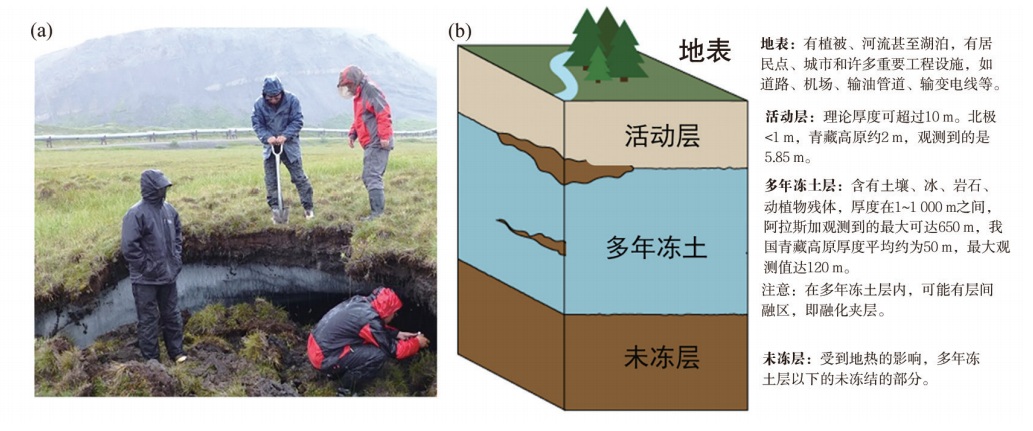
多年冻土主要分布在高纬度和高海拔地区,占北半球陆地面积的四分之一。多年冻土是寒冷气候的产物,全球变暖导
致世界范围内多年冻土的普遍退化。多年冻土的退化将影响生态系统、水文过程和寒区许多重要工程设施的稳定性,并对
气候系统具有重要的正反馈作用。目前,虽然对北极和青藏高原的多年冻土开展了许多研究工作,但是仍有很多重要的科
学问题尚未解决。多年冻土变化及其影响的研究对人类认识和应对气候变化,实现联合国可持续发展目标具有重要的科学
意义。
Permafrost is mainly distributed in high latitude and high-altitude areas, most people know little about it, while permafrost
covers vast areas accounting for about a quarter of the land area of the Northern Hemisphere. As a product of cold climate, permafrost
is sensitive to climate change, and global warming has led to the wide permafrost degradation in the world. The permafrost
degradation can also have important effects on ecosystem changes, hydrological process, and many important infrastructures, and
also have feedback effects on climate. Nowadays, many studies have been conducted in the permafrost both in the Arctic and in the
Qinghai Tibet Plateau, while there are still many scientific questions need to be resolved. For better understanding of the future climate
change, as well as design and implement of sustainable development approaches, more attentions should be paid on the permafrost
change and its impact.