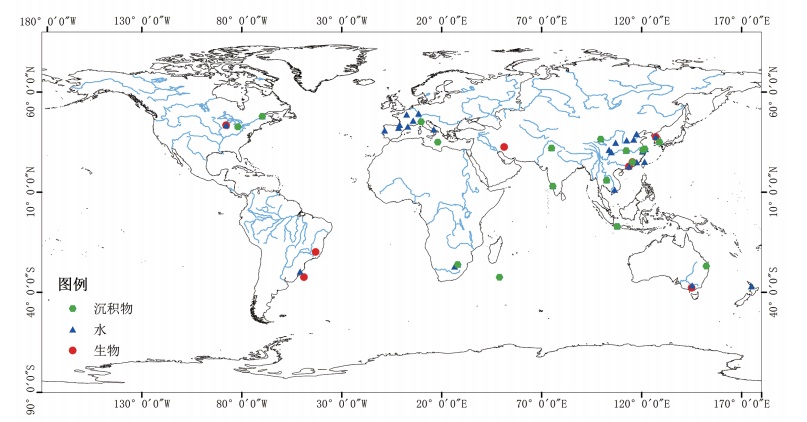
微塑料在环境中无处不在。作为一种新型环境污染物,微塑料对环境、生物和人类具有潜在危害。河流在微塑料污染传输过程中起着不可替代的作用,既是微塑料赋存的暂时汇,也是微塑料释放到海洋中的重要途径。对全球已有的河流微塑
料研究分析发现,巴西的西诺斯河水中微塑料丰度最高,中国的苏州河和突尼斯的吉达拉河沉积物中微塑料浓度较高。河流中的微塑料以粒径小于1 mm的白色纤维状为主。河流微塑料污染程度受人类活动和土地利用类型的影响显著,尤其是工业区河水中微塑料污染最严重。采样方法和实验试剂的选取也会影响鉴定结果,大流量采集的样本鉴定出的微塑料浓度更高。
目前,河流微塑料研究多集中在城市区域,对偏远地区河流中微塑料的检测还需加强。同时,由于河流中微塑料污染不断变
化,需要加强对河流微塑料污染的时空变异性研究,建立长期的实时监测机制,更好地掌握微塑料污染现状。
Microplastics are ubiquitous in the environment. As an emergent pollutant, microplastics are potentially harmful to the
ecosystems and human health. Rivers play an irreplaceable role in the transmission of microplastics pollution. They are not only a
temporary sink of microplastics, but also an important pathway for microplastics from land to the ocean. Through the overview of the
previous studies on riverine microplastics globally, we found that the highest abundance of microplastics was from the Sinos River
in Brazil, while for the riverine sediments, results from the Suzhou creek in China and the Jedara River in Tunisia were relatively
higher. The microplastics in the rivers were mainly white fibers with a particle size of less than 1 mm. The microplastic pollution was
significantly affected by human activities and land use types especially in industrial areas. The selection of sampling methods and
experimental reagents will affect the concentration of microplastics, and result from large flow sampling were identified with more
microplastics. However, the current researches on microplastics in rivers are mostly focused in urban areas, the related studies in
remote areas should be strengthened. Meanwhile, due to the continuous changes of microplastic pollution in rivers, it is necessary to
study the temporal and spatial variability of river microplastic pollution and establish a long-term real-time monitoring mechanism in
order to grasp the status of microplastic pollution.