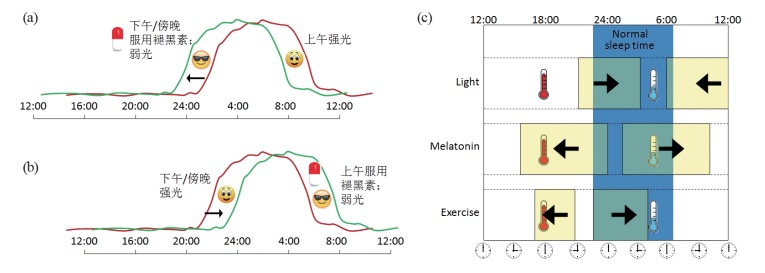
生物钟调节分子、生理和行为水平的节律,以适应环境因子的昼夜交替周期。生物钟与外界环境时钟失同步化会产生节律紊乱,从而对健康和认知造成不利影响。跨时区旅行以及夜班、轮班等社会性因素都会造成时差,导致主生物钟和外周生物钟失同步化,内在节律与环境出现失调。由于工业化进程的加快,经历时差或需要轮班工作的人们越来越多,节律紊乱问题及其对生理、代谢、免疫健康和行为的影响应引起重视。随着分子研究的不断深入,人们对时差产生的机理有了更为深刻的认识,同时一些物理、药物治疗方法以及饮食、睡眠和作息管理等措施被用以缓解或治疗节律紊乱及相关症状。文章对生物钟的调节机制,时差和社会性时差对健康、认知等方面的影响,以及目前的治疗措施进行了综述。
The circadian clock regulates rhythms at the molecular, physiological and behavioral levels, to adapt to the daily cycles of
environmental factors. Desynchronization of circadian rhythms with the external environmental cues causes circadian misalignment
with detrimental effects on health and cognition. Rapid travelling across the time zones and social factors such as night work and
shift work leads to jet lag and desynchronization between the central and peripheral clocks and between the internal rhythms with
the environment. Owning to industrialization, more and more people experience travelling or social jet lag, the effects of circadian
misalignment and its impacts on physiology, metabolism, immune and behavior should be taken into account. The advances in
molecular mechanisms underlying circadian clock furthered our understanding jet lag, and a number of physical and pharmacological
measures as well as social treatments regarding diet, sleep and rest management are developed to alleviate or counter the circadian
misalignment and related symptoms. In this review, we summarized the comprehensive features of the circadian clock system, the
effects of jet lag and social jet lag on health and performance, and the treatment strategies of jet lag.