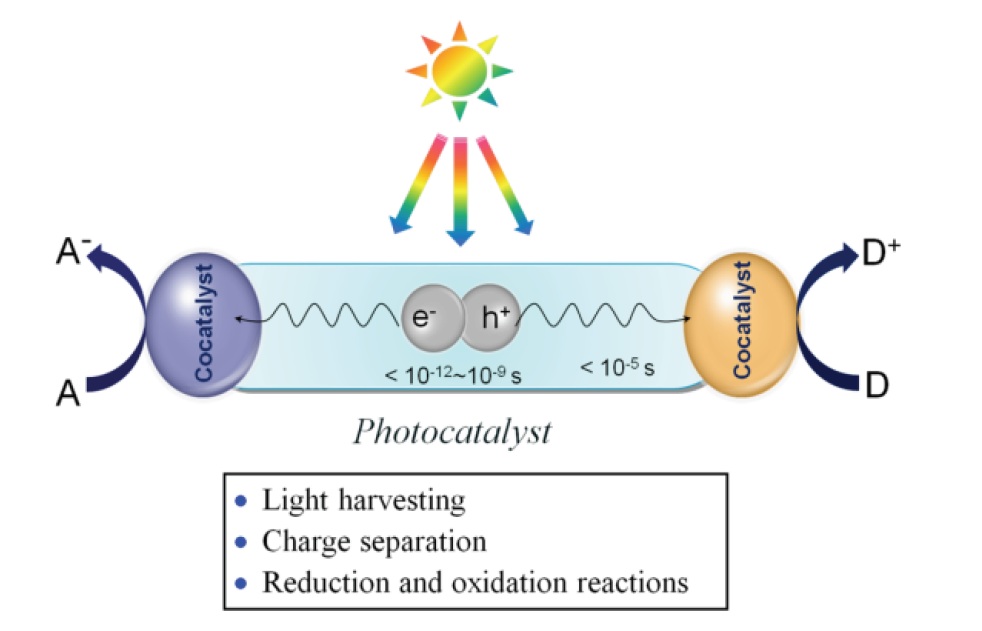
光催化技术可以直接利用低能量密度的太阳光驱动化学反应,实现用太阳能-高密度化学能直接转化来生产清洁能源和工业原料,也可以驱动污染物和有毒物质降解来治理环境污染,具有巨大的应用潜力。尽管光催化材料的研究开发已有越来越多的报道,但在催化活性、选择性、稳定性等方面还远不能满足大规模应用的要求。近年来,在众多被报道的光催化剂中,二维半导体材料表现出优异的催化性能和应用潜力,文章系统性总结了二维半导体光催化材料的研究现状,并对未来的研究方向进行了展望。
Photocatalytic technology can directly use low-energy-density sunlight to drive chemical reactions to realize the direct conversion of solar energy to high-density chemical energy to produce clean energy and industrial raw materials, and can also drive the degradation of pollutants and toxic substances to control environmental pollution. Although there have been more and more reports on the research and development of photocatalytic materials, they are still far from meeting the requirements of largescale applications in terms of catalytic activity, selectivity, and stability. In recent years, among many reported photocatalysts, twodimensional semiconductor materials have shown excellent catalytic performance and application prospects. This paper systematically summarizes the research status of two-dimensional semiconductor photocatalytic materials, and proposes future research and directions outlook.