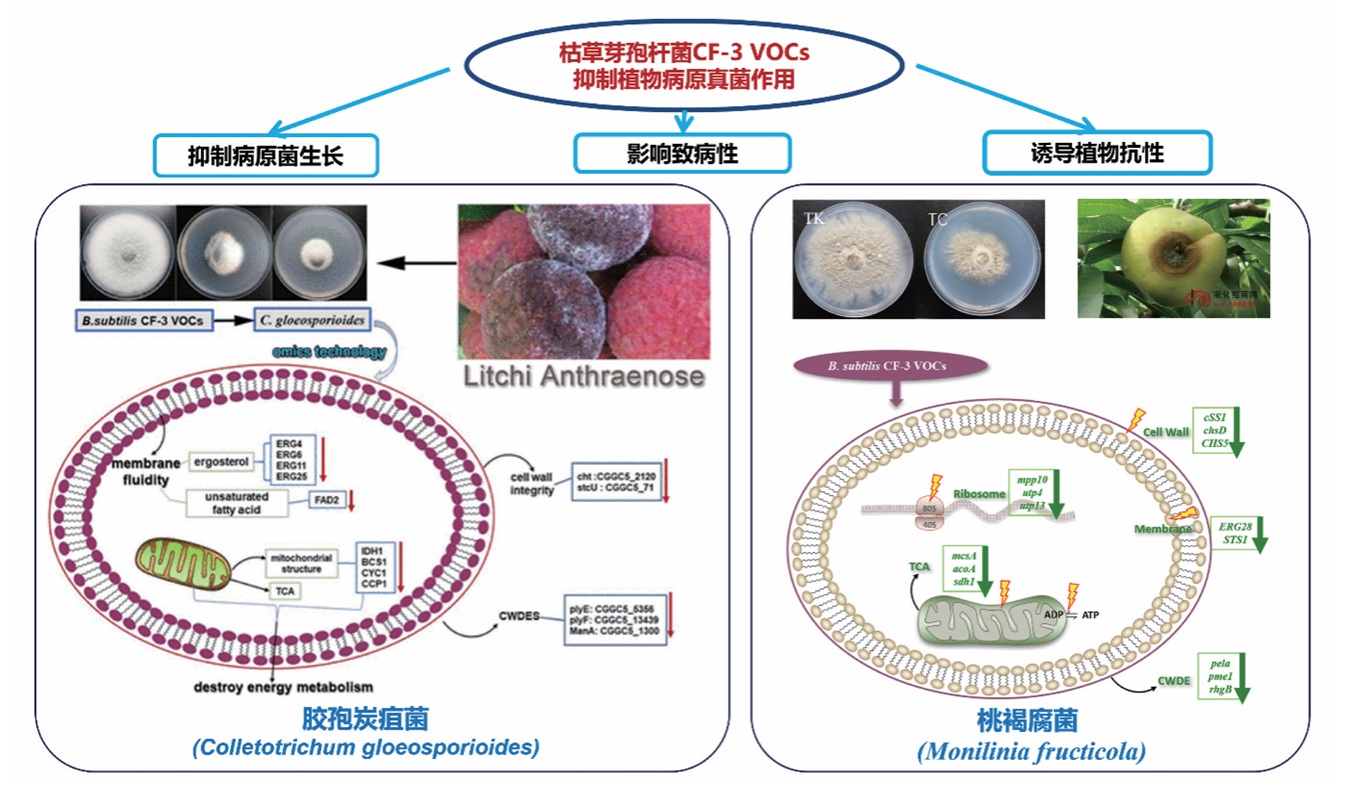
中国是全球最大的果蔬生产国,但由病原微生物侵染导致的采后损失率高达15% ~ 25%,这不仅造成巨大的经济损失,也对食品安全和资源可持续利用构成严峻挑战。在“健康中国”战略和“双碳”目标的政策驱动下,发展绿色、安全的生物防腐保鲜技术对减少化学防腐剂依赖、推动果蔬产业低碳转型具有重要意义。本文系统综述了动植物源抗菌活性物质、拮抗菌及其代谢产物、新型酶制剂等生物防腐保鲜技术的作用机制与应用前景,探讨其产业化应用的瓶颈与对策,为突破果蔬采后减损关键技术、构建绿色供应链提供理论支撑。
China is the world's largest producer of fruits and vegetables, yet postharvest losses caused by pathogenic microbial
infections remain as high as 15% ~ 25%, resulting in significant economic losses and posing serious challenges to food security and
sustainable resource utilization. Driven by the “Healthy China” initiative and the “Dual Carbon” goals, the development of green and
safe biocontrol preservation technologies is of great significance in reducing reliance on chemical preservatives and promoting the
low-carbon transformation of the fruit and vegetable industry. This paper systematically reviews the mechanisms and applications
of bio-preservation technologies, including antimicrobial compounds derived from plants and animals, antagonistic microorganisms
and their metabolites, and novel enzyme preparations. Furthermore, it discusses the current bottlenecks and potential strategies for
industrial-scale implementation. The findings provide theoretical support for key technologies in reducing postharvest losses and
establishing a sustainable green supply chain.