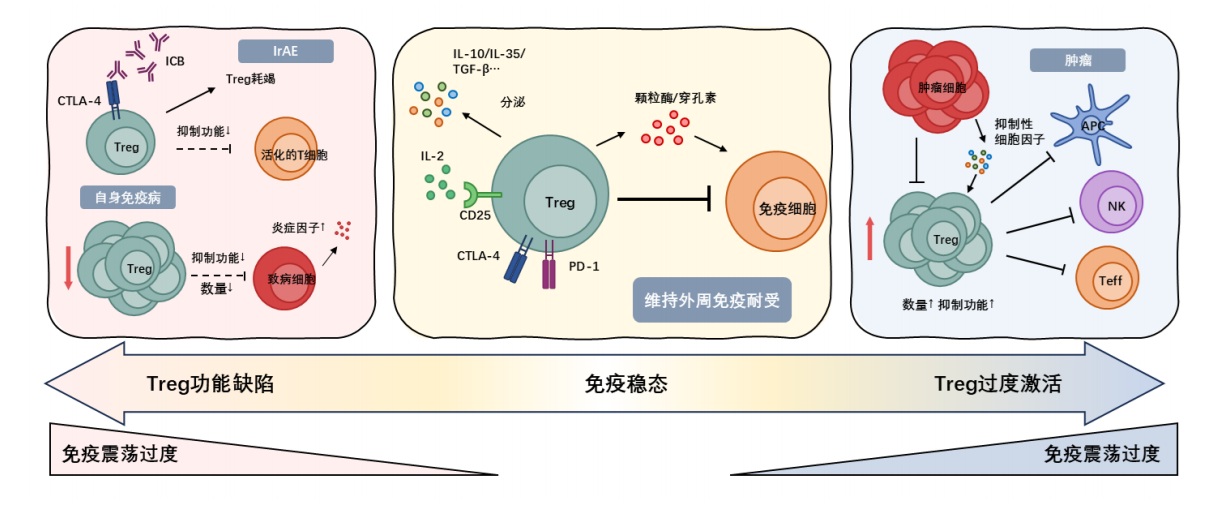
The 2025 Nobel Prize in Physiology or Medicine is awarded to three scientists for their pioneering contributions to the field of regulatory T cell (Treg) research. Their work unveiled the core mechanisms of peripheral immune tolerance, which has driven research in the field of immunoregulation over the past decades. Studies in recent years have revealed that the immune system of organisms maintains a delicate balance among clearing pathogens, repairing tissue damage, and preserving self-tolerance. Immune homeostasis is not a static equilibrium but rather involves a “physiological micro-perturbation” finely regulated by Treg cells. When the functional plasticity, or stability of Treg cells is disrupted due to dysregulated molecular mechanisms, an imbalanced immune network, or external factors, immune dysregulation occurs, which can subsequently trigger autoimmune diseases. In-depth research into Treg cell mechanisms and their integration with clinical applications hold the promise of achieving precise regulation of immune balance. This could allow more patients suffering from autoimmune diseases, cancers, neurodegenerative disorders, and other inflammatory diseases to benefit from the medical revolution brought about by this Nobel Prize-winning achievement.