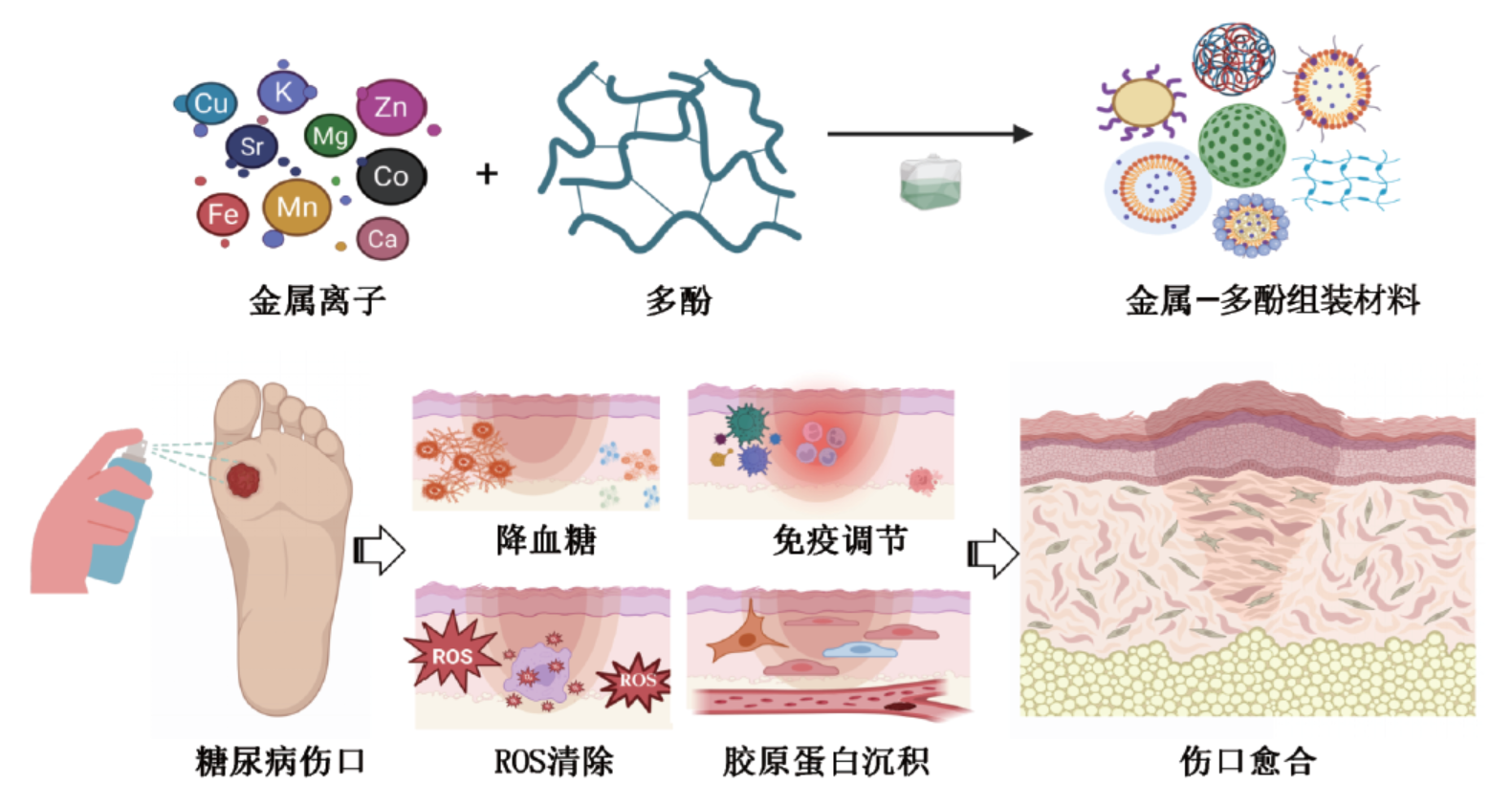
糖尿病是一种全球广泛流行的代谢性疾病,常伴随着微血管和大血管的并发症,其中糖尿病伤口是最为严重的并发症之一,显著影响患者的生活质量。目前,因临床使用的药物价格高昂、获取困难以及可能引发一系列副作用等问题,亟需寻找新型治疗方案。近年来,金属-多酚组装材料因其优良的生物相容性、抗氧化及抗炎的特性而受到越来越多的关注。本综述系统探讨金属-多酚在糖尿病伤口修复方面的研究进展。文章首先探讨糖尿病创面的异常微环境特征及其愈合障碍的机制,进而阐述不同金属-多酚体系的构建策略及其在改善创面微环境(如抗炎、抗氧化、促血管生成)中的具体应用,最后,深入分析该领域当前面临的技术挑战,并对其工程化设计与临床转化方向进行展望,旨在为新型糖尿病伤口修复材料的研发提供理论参考。
Diabetes mellitus is a globally prevalent metabolic disorder frequently associated with microvascular and macrovascular complications. Among these, diabetic wounds represent one of the most severe sequelae, significantly compromising patient quality of life. Current clinical drugs are often limited by high costs, restricted accessibility, and the potential for adverse side effects, necessitating the urgent development of novel therapeutic strategies. In recent years, metal-phenolic materials have garnered increasing attentions due to their superior biocompatibility, antioxidant activity, and anti-inflammatory properties. Here, we systematically review the progress of metal-phenolic networks (MPNs) in diabetic wound repair. We first review the characteristics of the aberrant diabetic wound microenvironment and the mechanisms underlying impaired healing. Subsequently, we elucidate the assembly strategies of various metal-phenolic systems and their specific applications in modulating this microenvironment, including their anti-inflammatory, antioxidant, and pro-angiogenic properties. Finally, we critically evaluate the current technical challenges in the field and provide an outlook on future engineering designs and clinical translation pathways, aimed at offering a theoretical framework for the development of next-generation materials for diabetic wound repair.